GL
GL  ES
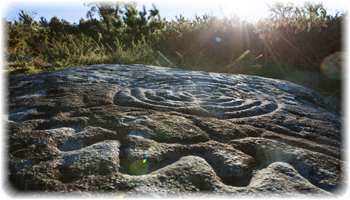
ES The first traces of human occupation in Valga are from the Bronze Age (1800-600 BC). To this period belongs the petroglyph of Camporredondo, better known as the Petroglyph of the Serpents. The Celtic fortifications of Roda do Castro (in Setecoros) and O Castro (in Cordeiro) are testimony of the castrexa culture from the 6th century BC to 2nd century AD.
Recent archaeological excavations reveal a significant occupation under the Roman Empire. In Igrexa Vella there is a glass production furnace demonstrating artisanal activity with commercial purpose, and in Mercado dos Mouros, evidence of trade has been found, making this site a river port of great relevance for the study, not only of the Ulla River but of the entire region during this period.
The lands of Valga were, during the Old Regime, under the jurisdiction of Cordeiro and Padrón, which belonged to the archbishopric of Santiago. At the beginning of the 19th century, during the Peninsular War against the French, a bloody battle occurred in Casal do Eirigo. The local inhabitants, led by Pablo Morillo and the priest Concha, defeated the troops of Ney and Maucune, forcing them to retreat to Pontecesures.
The municipality arose with the local division of 1821, established by the Cortes of Cádiz. The town was called Cordeiro until the municipal division of 1836, when it received its current name. In 1925, part of its territory was lost due to the segregation of the parish of San Xulián de Requeixo, now part of Pontecesures.
Currently, archaeological work at the sites of Igrexa Vella and Mercado dos Mouros allows us to investigate our past and continue discovering details about the people who inhabited Valga.